Forgot Password

Not a Member? Sign up here!

Meet the Difference-Makers Archives for 2025-12

United Way Reinforces Mission, Supports Community Needs

WAYNE COUNTY, Ind. – United Way has been part of the community for nearly a century, and as needs grow, the organization’s message remains simple: “we’re still here.”

United Way of Whitewater Valley serves Wayne and Union counties, focusing on youth opportunity, mental health, and seniors living on fixed incomes.

“We want everyone to be financially secure, to have a healthy community, and also just generally to be a resilient community. So those are the areas that we look to lift up those that are struggling,” said Tamara Brinkman, President at United Way of Whitewater Valley.

How United Way Works

United Way works as a funder, thought leader, and a convener, gathering donations during campaign season and distributing them to organizations addressing local needs. The organization does not fund individuals directly but connects residents to agencies that can help.

“We don't have programming on our own, but we bring groups together to talk about the needs. We bring donors together at a variety of levels to fund those needs, and then we monitor where the money goes and how the organizations are doing with those programs,” said Karen Pipes, board chair.

Company donors include First Bank Richmond, Ahaus Tool & Engineering, 3Rivers, and Wayne County offices, among others. An annual grant cycle opens funding to nonprofits each year.

“Historically we got money from employee campaigns, meaning a group of people could come together at one dollar or five dollars a paycheck and come out with $10,000, which is pretty impactful,” Pipes said.

Funding also comes from individual donors and family foundations, with a strong emphasis on year-end giving. 

Pipes said the organization is working to rebuild its brand identity. “We've kind of lost a little bit of our identity and we've been trying really hard the last 18 months to talk to donors, talk to those employee campaigns, but also engage people on the board that can talk to their circles and make sure that they know that United Way is still here,” she said.

Community Needs

United Way uses the national ALICE data tool to track families who work full-time but still cannot afford basic expenses. Locally, half of all families struggle to meet basic needs. For single-parent households with children, the number rises to 70 percent, and more than half of residents age 65 and older face similar challenges.

Brinkman said rising costs are hitting older residents especially hard, because many seniors rely on fixed incomes that don’t increase with inflation. With the county’s population skewing older, these struggles are becoming more common.

“We're going to be in that senior space. We're going to keep pushing into that because they're just aging further. And then, you know, we need to get more young people into the community,” she said.

Currently, few programs specifically address senior needs, as most services are geared toward youth. Pipes said United Way uses data to determine where funding should go: “We take those numbers and we look at our community and say who are the partners we can fund and they apply for our funding that we have available.”

Impact in Action

One example of United Way’s impact is the introduction of Trust-Based Relational Intervention (TBR) into Wayne County Schools during the COVID-19 pandemic. The trauma-informed curriculum, developed by Texas Christian University, helps teachers understand and respond to student behavior rooted in trauma.

“It's understanding the behavior that's causing disruption in the classroom and the teachers and everybody else,” Brinkman said. “There's a reason why that child is acting that way. This is really meant to give teachers a tool to help them get that kiddo kind of regulating themselves again.”

“So rather than just scolding the child or punishing them for the outburst, you're trying to understand what their need is and then once you can get them in a regulated state, then you can have the discussion if there's consequences,” Pipes said.

The program has also been offered to local nonprofits including Birth to Five, Girls Inc., and JACY House.

The STRIDE Center

United Way also invested $50,000 in the new STRIDE Center, calling it a major win for Wayne County’s mental-health infrastructure.

Kelly Benedict, Centerstone’s Director of Crisis Services in Indiana, said the mission of the STRIDE Center is simple but critical: helping people experiencing mental health or substance-use crisis find immediate safety and stability, ideally without involving law enforcement, jails, or emergency rooms.

“STRIDE is a key part of Centerstone’s broader crisis care continuum as a Certified Community Behavioral Health Clinic,” she said. “By offering timely, compassionate support, STRIDE helps reduce strain on hospitals and first responders while providing care that is more appropriate and person-centered.”

The center offers walk-in crisis assessments, short-term stabilization, and supportive de-escalation in a safe environment. Staff help individuals identify next steps and connect them to community resources, including outpatient treatment, housing support, and shelter services. Patients can also be referred to higher levels of care, such as acute hospitalization. There is also a remote mobile unit available to serve youth, so that kids aren't coming into the same facility as adults.

Benedict said the partnership between Centerstone and United Way emerged from a shared commitment to expanding crisis-care access. United Way’s financial support made it possible to renovate the building and open the center in February 2025. “The support turned a critical gap in services into a community resource for those in need,” she said.

The Center is open all day, every day of the year. Community involvement has been essential to the center’s success. Benedict said Centerstone collaborated with law enforcement, the fire department, the health department, and United Way before opening the facility. “We meet regularly to review progress, celebrate successes, and work together to address any challenges,” she said. “We are all really proud of what we’ve accomplished.”

Misconceptions and Changing Giving Habits

Pipes and Brinkman said one of the biggest misconceptions about the organization is that many residents don’t understand what United Way does. Rather than donating to a single program, contributions support a collective network of vetted nonprofits, ensuring accountability.

They also noted that fundraising has also changed over the years. In the past, nonprofits receiving United Way support were restricted from raising money during the fall campaign season, but those rules no longer exist, and now nearly every nonprofit is competing for the same limited dollars.

At the same time, habits are shifting. Longtime employee donors often retire, and younger generations tend to prefer hands-on volunteerism over financial giving.

“A lot of people want to do a volunteer event and, you know, run the food line or do something tangible. And yet giving here is tangible because we can maximize that dollar that you give us and flow it through to the organization you want to,” Pipes said.

Pipes added that residents don’t realize how much outside funding United Way brings into Wayne County, money that would not reach the community otherwise.

Looking Ahead to 100 Years

As United Way approaches its 100th anniversary in 2028, Pipes and Brinkman said they are working to reinforce the value of collective giving across their board and into the community.

“If you give $5 to us aside from that it's going to get matched and we're gonna put it to the greatest need, you're helping more people than you even realize with $5,” Pipes said.

You can find more information and ways to give on the United Way of Whitewater Valley website.


Richmond Shelter Offers Safety in Cold

RICHMOND, Ind. – Freezing temperatures have Richmond’s overnight warming center working to stay open for those in need.

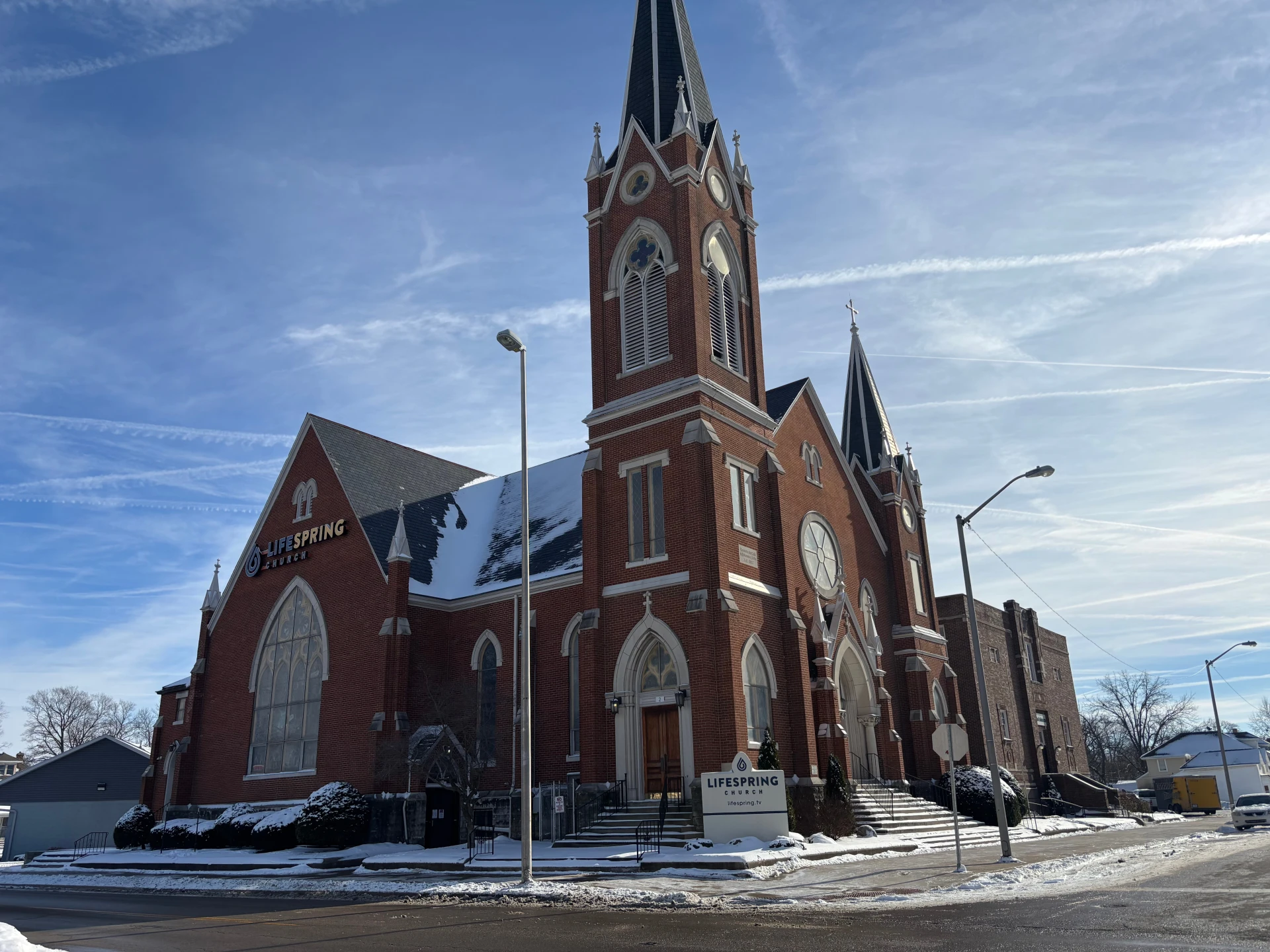
The center, located at LifeSpring Church South, 501 S. 7th Street, first opened in 2022. It activates whenever temperatures drop to 25 degrees or below, offering space for up to 20 guests.

Photo submission by Carl Rhinehart.

“Each guest will receive a hot meal when they arrive and also a hot meal before they depart the next morning,” said EWC Director Carl Rhinehart. “Guests receive a cot to sleep on with warm blankets and a pillow. We have clothes, hats, gloves, toiletries, wash clothes, and other items that guests may need while at the warming center or when they go back out.”

The center’s ability to open depends on volunteer support. “If we don’t have enough volunteers to safely run the center, we will not open,” he said.

At least three volunteers are needed per shift to handle setup, meals, transportation, and cleanup. While occasional funding allows for one or two staff members to be compensated, Rhinehart said the operation is primarily volunteer-driven.

Guests must arrive by 9 p.m. and remain inside overnight, with exceptions for those discharged from hospitals or brought in by law enforcement.

The warming center is sustained by grassroots support, including Oak Park Pentecostals, LifeSpring Church, and donations from local churches, businesses, and individuals. Funding varies year to year, making long-term stability a challenge.

“Community members donate supplies, meals, and their skills to the mission of the warming center,” said Rhinehart. “A consistent funding source for the next 3-5 years would be monumental in helping us recruit and retain individuals for key positions that would ensure that the warming center is able to meet the needs of the people and the mission despite the number of volunteers available.”

Rhinehart emphasized the center’s role in keeping people safe. Without it, he said, individuals may seek shelter in abandoned buildings or outdoors, sometimes resorting to unsafe fires to stay warm.

“Without the warming center, some individuals may fall victim to the elements, losing limbs or their life,” he said.

For Rhinehart, the mission goes beyond shelter. “Each night they spend in the warming center, is a night spent off the streets,” he said.  “Homelessness, despite being difficult to measure, is real in Richmond and throughout Wayne County,” Rhinehart said.

Volunteer hours are 6:00 pm - 10:00 pm, 10:00 pm - 2:00 am, 2:00 am - 6:00 am, and 6:00 am - 8:00 am.

For anyone wanting more details about Richmond’s Emergency Warming Center, there are a few ways to connect. You can follow the center’s Facebook page, Emergency Warming Center – Richmond, IN, call 2-1-1 for statewide assistance, or reach out directly through Facebook or by email at ewcrichmondin@gmail.com

Local Nonprofit Expands Recycling Access Across Wayne County

RICHMOND, Ind. – The first-of-its-kind recycling hub in Wayne County is aiming to educate residents on how to reduce their carbon footprint, especially during the holiday season.

Penny Ausmus opened the East Central Indiana RE Hub in September 2024. The nonprofit offers recycling options beyond the city’s own program and has quickly become a resource for items that typically end up in the trash.

Ausmus’ interest in recycling began when she was a child. Today, she leads the Green Club at Centerville High School, a role she’s held since 2008. She’s also on the Family Earth Day Committee.

“I was one of the kids that rode her bike around, picked up glass bottles and cashed them in,” Ausmus said. As she grew older, she was drawn to climate-change reporting and noticed how few recycling options were available locally.

She also observed that many community recycling dumpsters were short-lived, often shut down after being overwhelmed by improper dumping.

“People dumped couches, TVs, garbage,” she said.

The turning point came two years ago when Ausmus stumbled across the Cincinnati Recycling and Reuse Hub on Facebook. After visiting, she was struck by how quickly the operation had grown.

“They started right after the pandemic on one floor of an old factory. And when I went down there, they were on four floors of an old factory,” she said. “It was two and a half years ago when I went down there and I fell in love.”

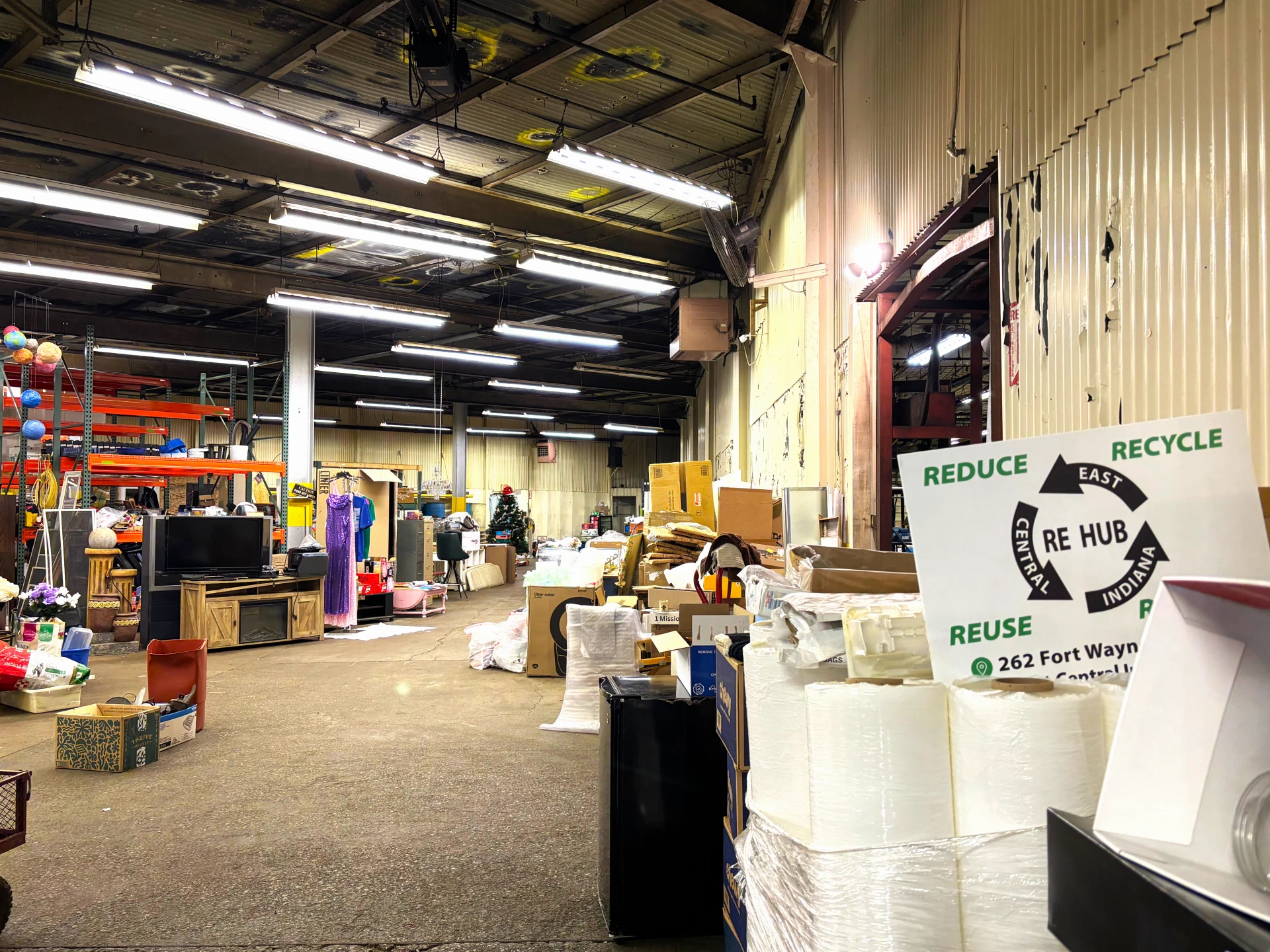
That visit inspired what would become Wayne County’s first recycling hub. The hub started at a smaller location before moving to an old factory just off North Eighth Street near the Depot District, with 10,000 square feet. After a little more than a year into operation, it is already planning a 5,000-square-foot expansion, expected for early 2026. This past year, the site saved 16 tons from the landfill.

The RE Hub accepts a mix of traditional recyclables as well as items typically destined for landfills, including furniture and books.

Accepted items include cardboard, ink cartridges, cell phones, CDs and cases, VHS tapes, computer accessories, household batteries, eyeglasses, plastic bread clips, aluminum cans, bubble wrap, brown kraft packing paper, Styrofoam, shoes, and tennis shoes. Shelves throughout the building display reusable items including Christmas décor, lamps, and more. The public is welcome to come in and purchase items.

“I tell people before you throw something away, ask, is there more life in it? Can it be reused? And if you answer yes, bring it here and see if we'll shelve it,” Ausmus said. “And then we let the public in here to shop and then we ask them to stop, and we weigh it before it goes out. We charge a dollar a pound.”

Typically, Ausmus relies on around eight to ten volunteers a week to help, though the number varies and some weeks, it can be less. With the expansion underway, Ausmus said more help is needed. Volunteers help sort bottle caps, tape household batteries for shipment, and separate plastic shopping bags, among many other tasks.

“I need more hands because it's a bigger place,” she said.

While the hub encourages residents to continue using the city’s recycling program, it serves as a supplemental resource for items that municipal recycling doesn’t accept.

“I've got ways for the majority of that stuff to get recycled one way or another,” Ausmus said. “It's not going to the ground.”

Education remains one of the hub’s primary missions. Ausmus regularly works with students across age groups and often thinks of her six grandchildren when explaining why the work matters.

This fall, the organization won a $5,000 grant from Earlham College through a local competition. The money will fund a mobile trailer designed to travel to communities throughout Wayne County to collect recyclables. The goal is to launch the trailer by May 2026.

For Ausmus, changing the county’s recycling habits won’t happen overnight. But she believes progress begins with awareness and thinking about how recycling can fit into daily routines.

“When you don't see it, you're not around it, it's so easy just to shrug it off and do your everyday routine,” said Ausmus. “What you got to do is just take baby steps into changing your routine. Just start with one item. Figure out one item that you use, see if it can be recycled, and then there. It makes it a lot easier.”

The RE Hub is open Thursdays from 1 to 6 p.m. and Saturdays from 10 a.m. to 2 p.m., located at 262 Fort Wayne Avenue in Richmond.

 More information can be found on the hub's website.

Boys & Girls Clubs of Wayne County Carla Stidham Christmas Shop Spreads Holiday Cheer

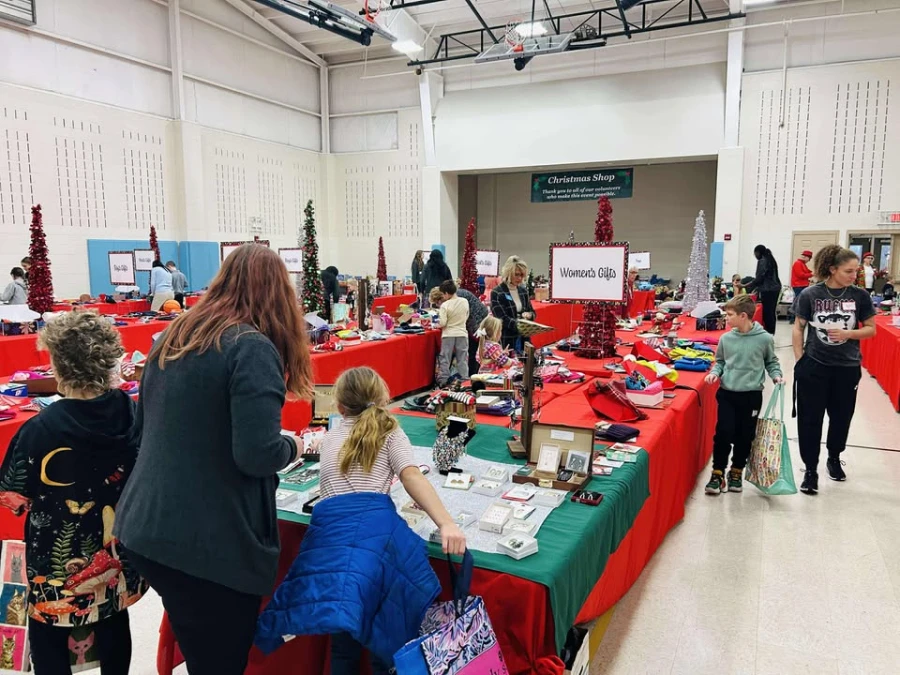
Richmond, IN, December 5, 2025 – Every December, Boys & Girls Clubs of Wayne County offer a holiday gift to their members and the community: The Carla Stidham Christmas Shop. The Carla Stidham Christmas shop is a week-long event where Boys & Girls Club members can “purchase” and wrap gifts for their families and loved ones. Members earn “Santa Bucks” to exchange for their gifts through good behavior and program attendance in the week preceding the shop opening. In 2024, the Club served 553 kids and sent over 2,600 gifts throughout the community thanks to the program.

“The Carla Stidham Christmas Shop is the highlight of the year for many of our Club Kids,” Boys & Girls Clubs of Wayne County Chief Operating Officer Rebeckah Hester explained. “Kids take pride in being able to give back to their families and find the perfect gift for their loved ones. It teaches them to think of others during the holidays and to cultivate a spirit of generosity.”

While the shop may only come once a year, it represents a year-long project for the Club’s Christmas Shop Committee who source donations and discounts to fill the space with items from toys to tools and jewelry. Local businesses including Ahaus Tool & Engineering, Better Homes & Garden First Realty Group, Blue Buffalo, Earlham College & Athletics, Ivy Tech, Manpower, Natco, and VanVleet Insurance ran donation drives in 2025 to stock the store.

The shopping experience also relies on the holiday spirit of over 200 volunteers who help Club members select and wrap presents. If you are interested in volunteering, please reach out to Boys & Girls Clubs of Wayne County Events & Administrative Coordinator Lauren Murray at lmurray@bgcrichmond.org.

Boys & Girls Clubs of Wayne County’s Board of Directors named the program in memory of Boys & Girls Clubs of Wayne County Lifetime Board Member Carla Stidham. Stidham created the Christmas Shop program after joining the board in 1995 and remained an organizer and champion until her passing in May of 2024. The program has grown exponentially since its inception, and the Club has been able to extend this unique gifting opportunity to other youth-serving nonprofits including Achieva Resources and Girls Inc.

The mission of the Boys & Girls Clubs of Wayne County is “to inspire and enable all young people, especially those who need us most, to reach their full potential as productive, responsible, and caring citizens.” Members of the Club, ages 6-18, have access to dedicated, trained professionals who provide guidance in adopting healthy lifestyles and pursuing educational objectives. Currently, the Club serves youth at six locations: the Jeffers, McDaniel, First Bank, Wayne Bank, and Hagerstown units; The CLUB Teen Center; and their 168-acre Camp Guy located on the Whitewater River. Since 1957, the Club has been striving to equip young people with the skills they need to succeed in life. For more information, visit www.bgcrichmond.org.

Photo and article submission by Kathryn Glen.

Community Spotlight

Local Plate