Forgot Password

Not a Member? Sign up here!

Historic Highlights

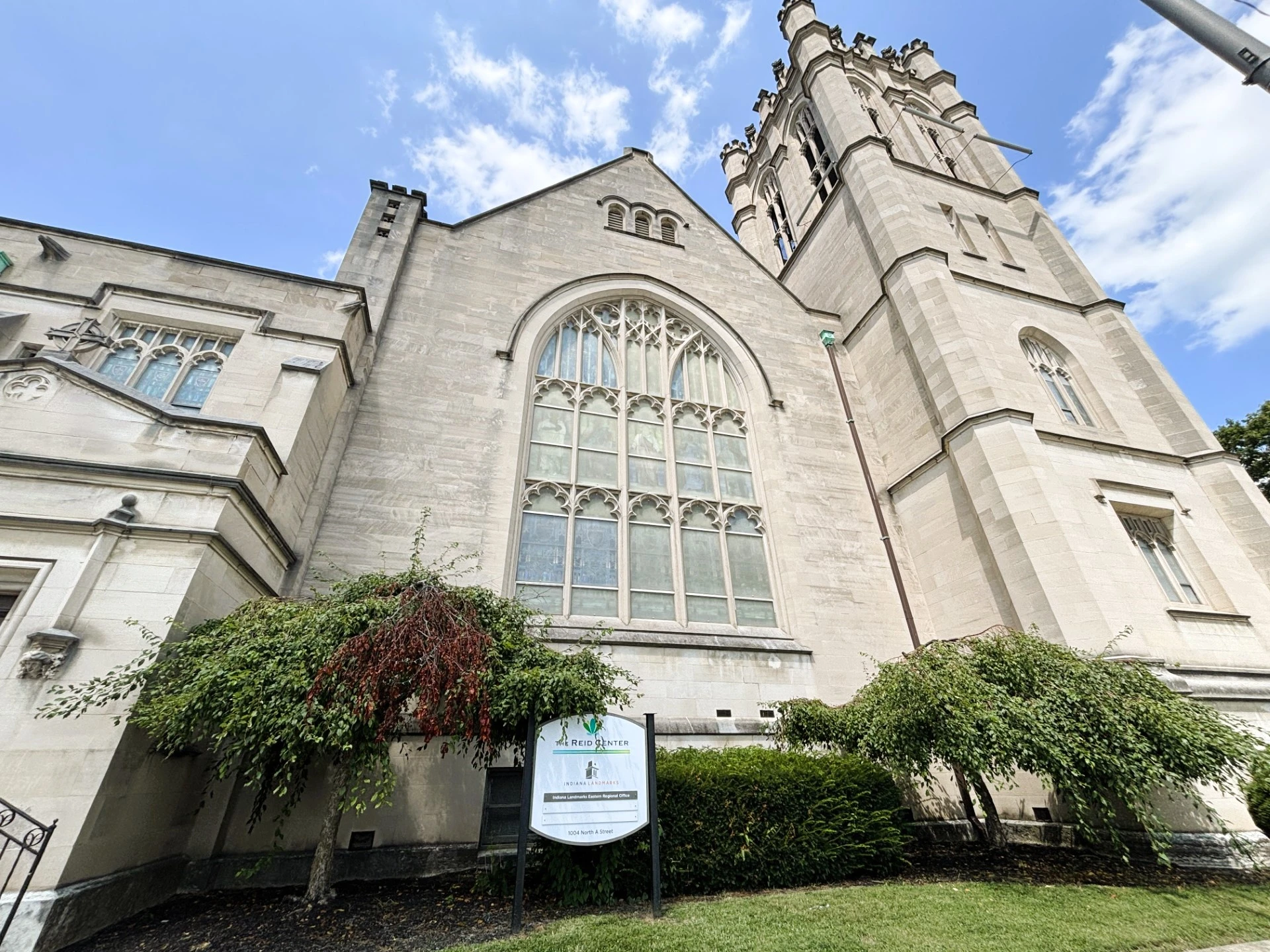
Historic Congregations of Richmond

INDIANA – Richmond is home to several historic churches whose origins date back nearly two centuries, offering a glimpse into the city’s early settlement, faith traditions, and architectural heritage.

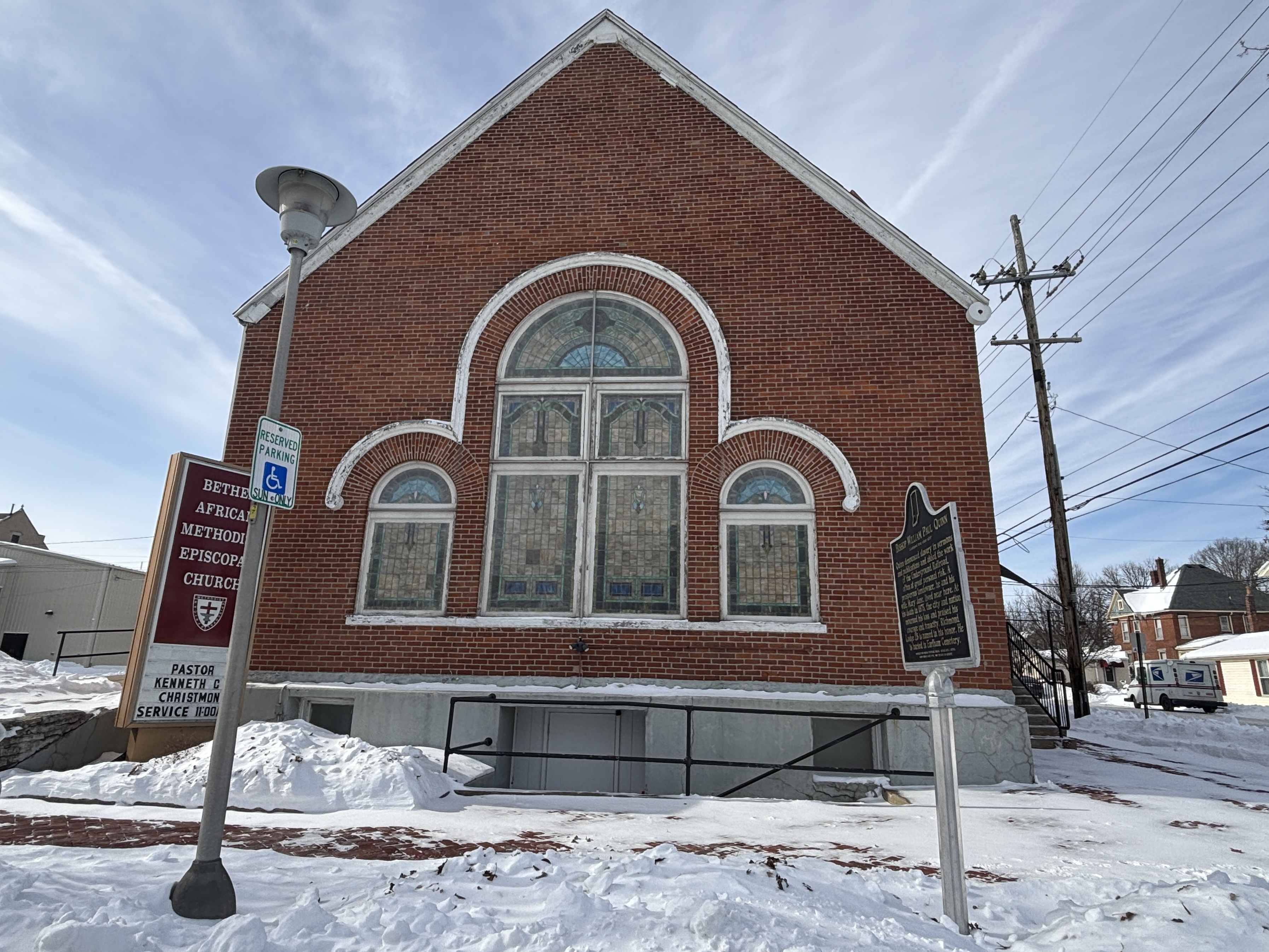
One of the oldest congregations in the city is Bethel African Methodist Episcopal Church, located on Sixth Street. Organized in September 1836 by missionary William Paul Quinn, the church began with 54 members. Today, the historic building is listed on the National Register of Historic Places, recognizing its cultural and historical significance.

Another long-standing congregation is First Presbyterian Church, located at 100 North 10th Street. Originally organized in November 1837, the congregation relocated several times before constructing its current Richardsonian Romanesque Revival-style building in 1887. The structure is a contributing property within the Starr Historic District and continues to serve an active congregation.

Richmond’s religious history is also closely tied to the Quaker tradition, which was among the first to settle in the area during the 1800s. The Whitewater Monthly Meeting was established in 1809, eventually leading to the formation of what is now known as Richmond First Friends Meeting, located along Chester Boulevard. While the congregation’s name evolved over time, its Quaker roots remain central to its identity.

Completing the city’s historic religious landscape is First Baptist Church, founded in 1837 and reorganized in 1865. After building a church in 1871, the congregation moved to a new facility in the 50's. Growth led to expansions and a major renovation to improve accessibility and modernize campus, with a dedication open house in November 2002.

Together, these churches stand as enduring symbols of Richmond’s diverse faith traditions and its long-standing commitment to community and worship.

Greenville's Historic Mill Earns Award for Restoration Project

GREENVILLE, Ohio - One of Ohio's last remaining operational water-powered mills is still grinding grain the old-fashioned way in Darke County. Bear's Mill, located just east of Greenville, continues to preserve its 19th-centruy heritage while serving the community as a historical and cultural site.

Originally built in 1849 by Gabriel Baer, the four-story mill was constructed using massive, hand-hewn timber beams nearly 50 feet long. It has operated almost continuously since its opening on January 1, 1850, when Baer's family first put the Mill to use.

Today, the Mill still functions by grinding grain into flour and meal using French Buhr millstones and traditional slow-grind techniques. These flours produced are sold on-site. 

"There are no typical days!" said the current mill operator, Sophie Nieport. "Some visitors have been here many times and are wanting to purchase some staples for their kitchen, some haven't been since they were kids and are excited for the nostalgic throwback, and some have never been to the Mill before."

The structure remains almost entirely original to 1849.

"The stones we still use to make flour were brought over on a ship in 1849 to Ohio from a stone quarry in France. These French Buhr stones are so much harder than stones found here in the United States, and last much longer," said Nieport.

Upgrades have been made to the mill over the years, with a major restoration project completed this past winter. 

"We reinforced everything with concrete pillars and steel beams. This will ensure the Mill will last another 176 years," said Nieport. The restoration project earned Bear's Mill the Best Commercial Rehab Project for a Small Community Award from Heritage Ohio.

Bear's Mill was placed on the National Register of Historic Places in 1975, and a nonprofit, Friends of Bear's Mill, was formed to ensure its preservation. In 2020, it was approved and transferred to the Darke County Park District.

"Having Darke County Parks own the Mill has benefited in every way possible. More funding is available for upkeep, more public access and view of the building and property, and more stability for the future of the Mill, it is not going anywhere!" Nieport said.

The Mill is open and free to the public Tuesday through Sundays from 11 a.m. to 5 p.m. Visit their website for more information. 

Image provided by Sophie Nieport.

The Living History of the Gennett Mansion

The Gennett Mansion is one of several historic pieces still standing in Richmond. The large, three-story home was built in 1898 for Henry and Alice Gennett. Now, over 100 years later, it is privately owned by another family, Tina and Ralph Conti, who have made it their home, restoration project, and connection to the community.

Henry Gennett was the founder of Gennett Records & president of Starr Piano Company. The Gennett’s moved to Richmond for the Starr Piano Company. Henry Gennett took over control of the company following the death of James Starr and he later passed the business on to his three sons, Harry, Clarence, and Fred. The Gennett’s also started the Gennett Recording Studio in Richmond, an independent recording studio.

The original Gennett family moved out of the house in 1938. From that time on, it had several different owners and was used for different purposes. That year, local businessman Leonidas Kennedy purchased the home and converted it into an apartment complex. Kennedy, who owned Kennedy’s Clothing Store on Main Street, between 5th and 10th Streets, offered the apartments to women entering the workforce during World War II.

“We were told it was mainly for women, young women, entering the workforce while the men were at war,” said Tina Conti, current owner of The Gennett Mansion. “This house, three stories, approximately 9500 square feet, was turned into efficiency apartments. There were like 20 apartments.”

The building remained an apartment complex until the 1970s, when it began to fall into disrepair. “It didn’t look so well. You know, walls, water damage, this and that,” Tina said.

Eventually, a man named Wayne Vincent and a group of partners bought the property, naming it the World Life Building. They maintained the house’s listing on the National Register of Historic Places and converted the space into offices. In the 1980s, the mansion was officially designated part of the East Main Street–Glen Miller Park Historic District and recognized as an Indiana Landmark.

The home continued to serve as office space up until the early 2000’s. In 2006, Bob and Donna Geddes purchased the mansion and began the process of restoring it as a residence, Airbnb, and event venue. They lived on the third floor while opening the first and second floors for public use. Before they moved out, they converted the second floor into an apartment with a two-bedroom suite, two additional bedrooms, and a shared kitchen.

Tina and Ralph Conti bought the mansion in 2015 from the Geddes family. Originally from Richmond, the Contis had lived in different areas of the country before moving back to Indiana officially in 2016.  

Tina described how they decided on purchasing the house when they returned for a visit in the fall of 2015.

“We saw the sign, and we looked and we’re like, for grins and giggles, let’s just call the realtor and see if we can take a look,” Tina said. This October marks ten years owning the mansion.

After purchasing the house, the Contis had two major utility projects to tackle. The first was converting the electric system in the house. In the basement, seven or eight separate electric meters were consolidated into one.

Tina described their initial projects as being less glamorous, focusing more on foundational work than on the “pretty stuff.”

Since moving in, the Contis have not done any restorative work on the first floor. However, they have worked on restoring the second floor to a layout similar to its original design.

Because the mansion is listed on the National Register of Historic Places, there are strict guidelines about what changes can and can’t be made. Before making any modifications, they must submit their plans to Indiana Landmarks for approval. The house is also located in the city of Richmond’s Conservation District, meaning any proposed changes must also be approved by the Historic Preservation Commission. Although Tina serves on the board, she would have to recuse herself from any decisions regarding her own home.

Indiana Landmarks conducts a walkthrough of the house every two years, during which they take photos and compare them to previous documentation.

“Whoever is the owner is the current steward or caretaker, and you do the best you can to keep it preserved and in good standing so it can be around for the next generation,” Tina said.

While several original elements remain—such as the wood floors, ceramic fireplaces, and bathroom tile—the home also features some thoughtful updates. Tina said she has spent time searching Marketplace and attending auctions to find furniture from the same era. One particularly unique feature is the piano, which has been in the home since it was built. Restored by the Geddes family, the piano was so integral to the home's character that Tina and Ralph made sure it was included in the purchase agreement. Today, it stands in the front foyer, just inside the door, a quiet reminder of the home's history.

Tina said the first floor is still used as a venue and event space. The second floor, while still partially under renovation, is used as an Airbnb rental. While the floor is available to rent, most bookings have come through word-of-mouth. The Contis also continue to rent out the carriage house as an Airbnb.

The third floor is where Tina and Ralph currently live. While this is their home, Tina said they open their doors to the community, allowing time in their days for tours. They are also connected with Richmond Friends School since COVID, doing virtual and in-person class tours of the home.

“I might have a pre-arranged tour, or somebody just calls out of the blue or sends us a message and says, ‘we’re passing through and we saw this as a landmark.’ They think it’s a museum,” Tina said. “I try to say yes as much as I can because I want to see people’s faces the way I imagine my face was when I walked in.”

Tina said the house served as her segue back into the community. Because of it, she became involved with the city of Richmond, serving as president of the Historic Preservation Commission. She is also connected with the Wayne County History Museum, where she currently serves on the board.

Tina became involved with local nonprofits as a way to give back to the community she had rejoined. Through her work, she has become acutely aware of some of the challenges facing Richmond and the surrounding area.

“I see that we have food insecurity and food deserts and homelessness problems. The opioid epidemic has hit us. So many members of our community are living at the poverty level or below. I feel fortunate that I was able to rise up out of that, so I want to give back.”

Beyond her volunteer work, Tina says the mansion itself has played a surprisingly powerful role in building community. Opening its doors for events, tours, and Airbnb guests has allowed Tina and Ralph to meet people from all walks of life, both locals and visitors, who come with stories, memories, and personal connections to the area.

“The friends I made here are just incredible. That I made such a connection on such a deep level that I never thought was possible and never thought about.”

For now, the Contis plan to stay in the mansion, but they’re also thinking ahead to future possibilities. Tina said they want to continue keeping the mansion’s doors open to the public and remain committed to preserving it for as long as they own it. That long-term vision also includes finding new ways to share the space with others, an idea shaped by Tina's early experiences.

“We were struggling to make our duplex rent of $250 a month, you know, so very humble beginnings,” Tina said. “And I’d like to think I can look at it from different perspectives. So, I come in and I’m like, how cool would it be for somebody to be able to rent this entire building?”

She added that one of their goals, something they joke about more seriously now, is to eventually get a tiny house. She envisions the mansion continuing to be a place for meaningful gatherings.

“Whether it’s a reunion, a wedding, a girls’ weekend, a small family reunion, people that have moved away and come back to visit, now you’ve got this huge kitchen and all this space, and you have seven bedrooms that you can host family members in and even the carriage. That would be so cool.”

If people want more information, they can go to The Gennett Mansion Facebook page. The carriage house is on Airbnb and Google Maps.

Image provided by Tina Conti.

A City Rebuilt After the Explosion of 1968

RICHMOND, Ind. - On April 6, 1968, Richmond faced tragedy when a massive gas explosion downtown claimed 41 lives, injured more than 150, and destroyed much of the business district.

The disaster struck on a Saturday afternoon at 1:47 p.m. The initial explosion occurred at the southeast corner of 6th and Main Street, triggered by a natural gas leak from faulty underground transmission lines beneath the Marting Arms sporting goods store.

A second, more powerful blast followed, fueled by gunpowder stored inside the store. The dual explosions devastated the heart of the business district, leveling buildings and shattering windows. The explosions destroyed 15 buildings and heavily damaged many more in the downtown core.

In the days leading to the explosion, residents and business owners reported the smell of gas, but the source of the leak was never located in time. An extensive investigation followed, but no criminal charges were filed. 

A memorial now stands near the blast site to honor the lives lost from the incident.


The Birthplace of Recorded Jazz

RICHMOND, Ind. - Richmond played a key role in American music history. In the early 1900s, Gennett Records recorded some of the very first jazz artists. This included legends like Louis Armstrong, Hoagy Carmichael, and Jelly Roll Morton.

These groundbreaking sessions put Richmond on the cultural map and cemented its place in music history. Gennett Records gave a platform to pioneering musicians at a time when few others would, breaking barriers. This helped define the sound of early American jazz and popular music. Gennett also recorded artists including Blind Lemon Jefferson (blues), and early country acts like Vernon Dalhart and Gene Autry.

Gennett Records was founded by the Starr Piano Company and was active during the 1920s until the late 30s. 

Today, the Gennett Walk of Fame celebrates those iconic sounds. The building is in the Whitewater Gorge Park. Bronze medallions shaped like records, line the path. Each one commemorates an artist who recorded at Gennett.

Archives:

2026-01 | 2025-10 | 2025-09

Community Spotlight

Local Plate